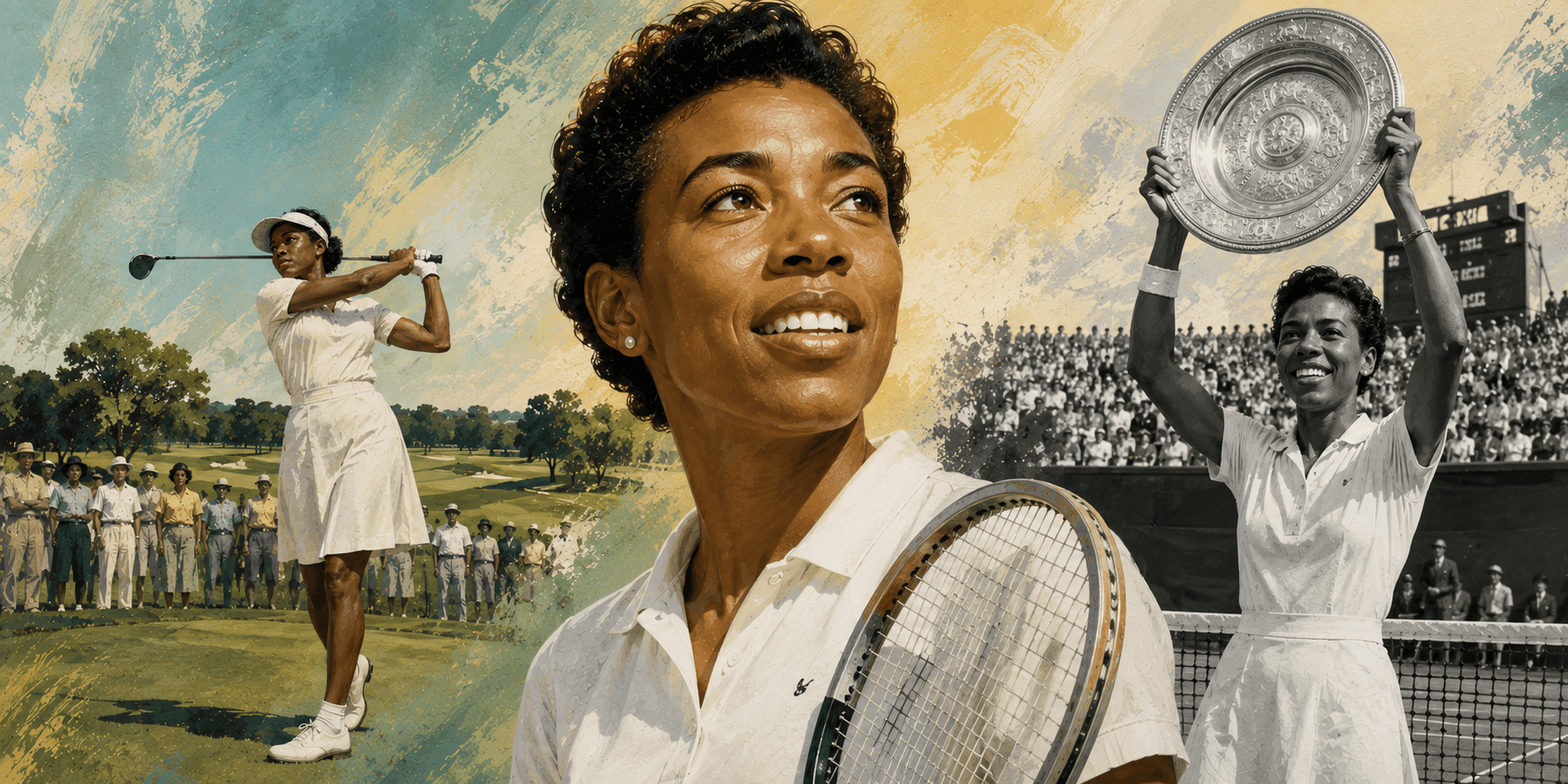

Althea Gibson’s Second Act
Most people remember Althea Gibson as a tennis legend. Fewer know she also became the first Black woman to compete on the LPGA Tour, breaking another barrier and opening doors for generations of Black women golfers.

July 27, 2026 · Updated July 27, 2026
Long after she broke tennis’ color barrier, Althea Gibson set out to challenge another one.
When most people hear the name Althea Gibson, they think of Wimbledon.
They remember the powerful serve, the Grand Slam titles, and the history she made as the first Black player to win major championships in tennis.
What far fewer people know is that Gibson wasn’t finished breaking barriers.
After retiring from amateur tennis, she walked away from the sport that had made her famous and entered another that remained overwhelmingly white: professional golf.
In 1964, Gibson became the first Black woman to compete on the LPGA Tour, nearly two decades after the LPGA was founded. It was another historic milestone, but this one came with very different circumstances.
Unlike tennis, where Gibson eventually reached the top of the sport, golf asked her to begin again.
She entered professional tournaments in her late thirties, competing against players who had spent their entire lives developing their golf games. She never won on the LPGA Tour, but victories were only part of the story.
Traveling from tournament to tournament, Gibson still encountered discrimination. There were events where Black players were denied lodging at host hotels and forced to find accommodations elsewhere. Financial sponsorships were scarce, and opportunities were limited.
Yet she continued to compete.
Her presence mattered because every tournament she entered challenged assumptions about who belonged on a professional golf course.
Her golf career wasn’t measured by victories. It was measured by the doors she opened.
Future generations—including Renee Powell, Cheyenne Woods, Mariah Stackhouse, Ginger Howard, Sadena Parks, and today’s rising Black women golfers—followed a path made a little wider by pioneers willing to walk it first.
Gibson’s golf career is often treated as a footnote to her extraordinary tennis legacy.
It deserves more than that.
It represents something many athletes never attempt: reaching the pinnacle of one sport, then willingly becoming a beginner in another, all while confronting the same racial barriers she had already spent a career overcoming.
For BLAC Golf, Althea Gibson’s place in history is not measured by LPGA victories.
It is measured by courage.
She proved that breaking one barrier was never enough when another still stood waiting.
Why This Story Is on BLAC Golf
Althea Gibson is best known as a tennis champion, but her decision to compete on the LPGA Tour makes her an essential figure in Black golf history. She was the first Black woman to play professional golf at the highest level, and every Black woman who has followed her onto a competitive golf course walks a path she helped clear. BLAC Golf tells the stories that connect Black culture to the game — and Gibson’s second act is one of the most important chapters in that story.
Filed under
Every question deserves a better answer than a search result — here's where this story leads.
Central Florida’s Black Golf Legacy Runs Deeper Than Most People Realize
From Herbert Dixon in Bartow to generations of golfers throughout Polk County, Orlando, and Tampa, Central Florida has quietly produced an important chapter in Black golf history that is only beginning to be documented.
The Bartow Golfer Who Ended Charlie Sifford’s Five-Year Reign
Herbert Dixon learned golf while caddying at Bartow Golf Course during segregation before becoming the 1951 National Negro Open champion and one of the most accomplished Black golfers of the twentieth century.
In This Story
Althea GibsonBroke barriers in two sports — tennis, then professional golf.Renee PowellLPGA pioneer and steward of America's most important Black-built course.Cheyenne WoodsLET winner, LPGA pro, and one of golf's leading broadcast voices.Mariah StackhouseFour-time All-American carrying the torch for Black women in golf.Ginger HowardTurned pro at 17 — the youngest African American woman to do so.Sadena ParksFirst African American to earn an LPGA card through the Symetra Tour.Organizations & Places
OrganizationLPGAHelp Us Get It Right
This coverage is a community project.
Spot something outdated? Know a person, business, or organization this story should connect to? A story we should tell next? It goes straight to our editors — privately.