Art + Culture
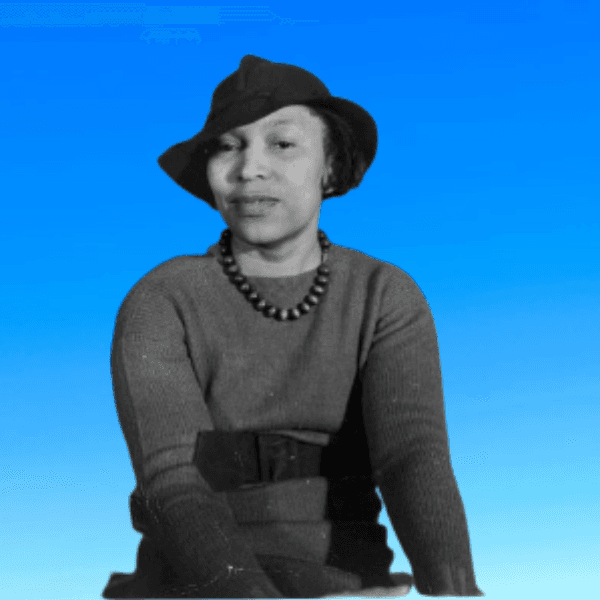
Zora Neale Hurston Deserves Her Flowers
January 10, 2023 · Updated January 10, 2023·By BLAC Staff
Zora was a prolific visionary gifting us with anthropological and literary works that have changed Black and American culture. Zora’s legacy has persisted since her death on January 28, 1960.

January 10, 2023 · Updated January 10, 2023
January 7th was Zora Neale Hurston’s 132nd birthday. Some of you are fans of Zora and Their Eyes Were Watching God. Many have no idea who Zora was. I have belonged to both groups. So, in celebration of Zora’s birthday, let’s give the prolific author her proverbial flowers with a brief introduction to her incredible life and legacy.

EXPOSURE
Born on January 7, 1891, Zora grew up in Eatonville, FL-the first all-Black incorporated municipality in the US. Her father, John, served as mayor for three terms and pastored the well-attended Macedonia Missionary Baptist Church. Her mother, Lucy, was a stay-at-home mom who encouraged her children to “jump at de sun”. Lucy’s death, in 1904, left Zora without her biggest supporter and protector. John quickly remarried and left his children to fend for themselves. The precocious Zora was unable to finish school or find stable housing. Finding a job as a maid for a Gilbert and Sullivan troupe lead singer over 10 years later offered Zora some security. The job exposed her to theater, opera, and showbiz, later informing her successful folk theater endeavors.
EDUCATION

Zora would go on to attend Howard University in 1919, continuing to present herself a decade younger after originally doing so to finish high school for free. While attending Howard, Zora pledged Zeta Phi Beta and joined the competitive Stylus literary society. During this time, Zora attended literary gatherings at poet Georgia Douglas Johnson’s house alongside W.E.B DuBois, Sterling A. Brown, Jean Toomer, Angela Grimke, May Miller, and more. Her first short story John Redding Goes to Sea and poem O Night was published in the Stylus’s May 1921 edition. Additionally, Zora co-founded the student-run paper, The Hilltop. Zora’s short story Drenched in Light was published in the National Urban League’s Opportunity literary journal in December 1924. Editor Charles S. Johnson would subsequently encourage the emerging writer to move to New York. Zora moved in January 1925 with only $1.50 ($26 today) in time to participate at the onset of the Harlem Renaissance.
HARLEM RENAISSANCE
On May 1, 1925, Zora secured her position as a Harlem Renaissance mainstay by winning the most awards at the inaugural Opportunity dinner. She gained the attention of wealthy, white progressives ready to support and fund the recognized Talented Tenth artists. Zora Neale Hurston, Langston Hughes, Countee Cullen and Miguel Covarrubias were a few artists able to leverage such offers. Connections from the Opportunity Awards Dinner led to Zora integrating Barnard College-the all-woman affiliate of Columbia University. There, Zora would be introduced to Columbia professor and anthropology pioneer Franz Boas. Under his tutelage, Zora would conduct her first independent field study in Florida with a fellowship partially funded by Carter G. Woodson’s Association for the Study of African American Life and History. Zora’s other anthropological tours included the American South, Nassau, Jamaica, Haiti and Honduras. Zora collected songs, children’s games, traditions and more. In each location, she worked to record and preserve the most authentic displays of African Diaspora cultures and dialects, which were frequently displayed stereotypically by white anthropologists. Her unprecedented success is demonstrated by the two volumes of folklore she published.

The First Black Woman Filmmaker on Record
Zora was deeply devoted to her work. She lived among her subjects in backwoods turpentine, sawmill, railroad work camps, and in Maroon communities abroad. She even initiated into hoodoo in both New Orleans and Haiti. In 1927 and 1928, Zora phonetically recorded the first-hand experience of the last known living person to be enslaved, Oluale Kossola aka Cudjo Lewis. She recorded footage of him, as well, making her the first Black woman filmmaker on record. The interview was posthumously published as Barracoon: The Last Black Cargo in 2018. Barracoon and Zora’s footage was extensively used in the 2022 Oscar Shortlisted Netflix documentary Descendant. By 1937, Zora was a three-time published author and a two-time Guggenheim Fellow conducting field studies in Jamaica and twice to Haiti. While in Haiti, Zora penned the most famous of her 7 books, Their Eyes Were Watching God, in 7 short weeks. A decade later, Zora would conduct another field study in Honduras, becoming one of the first anthropologists to explore the hieroglyphics and astronomical calendar of ancient civilizations there.

Zora was a prolific visionary gifting us with anthropological and literary works that have changed Black and American culture. Despite dying penniless in an unmarked grave (later marked by Alice Walker), Zora’s legacy has persisted since her death on January 28, 1960. Zora Neale Hurston resources are now plentiful, but the Zora Neale Hurston Trust™ has been working for decades “to promote the image of Zora Neale Hurston and her literary and anthropological works throughout the world.” You can visit the Zora Neale Hurston Trust™ website at www.zoranealehurston.com to find more Zora Neale Hurston resources and news. The site also offers Zora’s books and exclusive paraphernalia. This serves as a formal invitation to join me in giving Zora her flowers.

Written by Contributor Rae Chesny, a Zora Neale Hurston Scholar, interdisciplinary writer, and Johns Hopkins University Literary Consultant. Each year, she splits her time between researching, writing, and presenting on the literary great Zora Neale Hurston, while writing her own titles and empowering children to tell their stories. Rae currently serves as the Zora Neale Hurston Trust™ presents It’s All About Zora! Series host and resident Zora Neale Hurston Scholar. She is the author of Zora’s Garden. To learn more about Rae, visit www.raechesny.com.

Filed under
Every question deserves a better answer than a search result — here's where this story leads.

Why Every Metro Detroit Nonprofit Should Be Thinking About AI
How a local workshop is helping nonprofit leaders turn curiosity into practical action. For many nonprofit leaders, artificial intelligence still feels like something meant for Silicon Valley or Fortune 500 companies. It isn’t. Whether your organization has three employees or three hundred, AI is quickly becoming another tool that can help teams spend less time […]
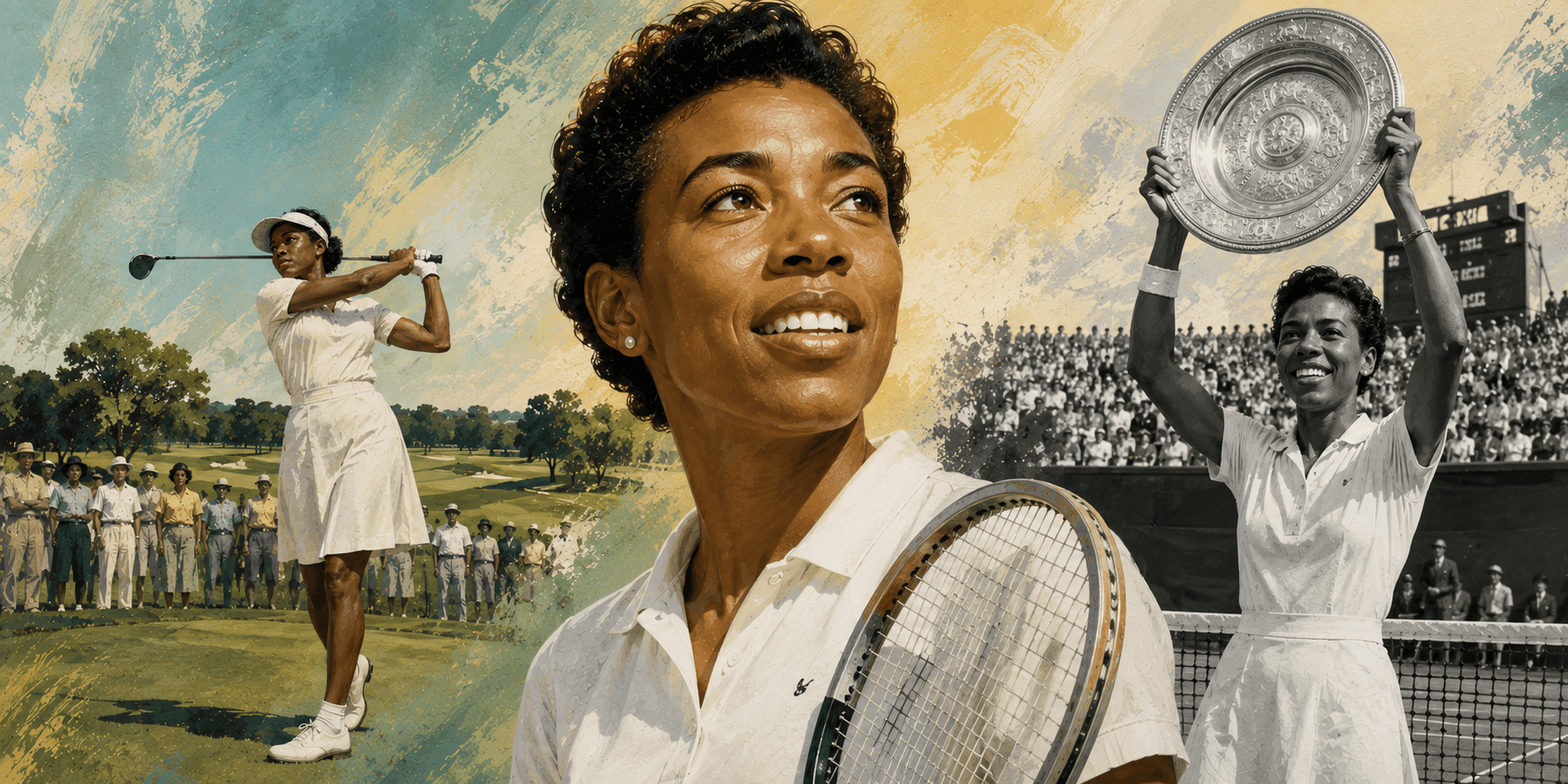
Althea Gibson’s Second Act
Most people remember Althea Gibson as a tennis legend. Fewer know she also became the first Black woman to compete on the LPGA Tour, breaking another barrier and opening doors for generations of Black women golfers.

Detroit Jazz Festival 2026 Guide
A local guide to navigating the Detroit Labor Day weekend jazz celebration.
Help Us Get It Right
This coverage is a community project.
Spot something outdated? Know a person, business, or organization this story should connect to? A story we should tell next? It goes straight to our editors — privately.