News + Features
Yes, there are Black investors in downtown Detroit. Here they are.
June 29, 2016·By BLAC Editorial
The new Paradise Valley Cultural and Entertainment District will have more than $50 million in mostly Black investment.
June 29, 2016
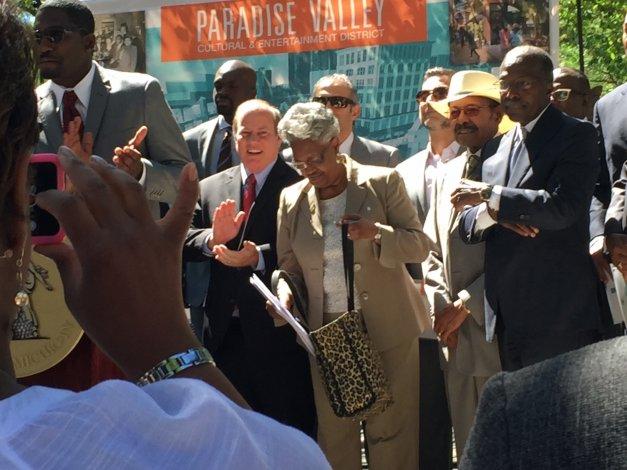
More than $50 million in development is being poured into redeveloping Detroit’s Harmonie Park neighborhood, which will take on a new name of Paradise Valley Cultural and Entertainment District.
And most of the investment comes from the pockets of Black developers.
Five development projects, four of which are led by Black firms, were announced today for the new district, named after the Black entertainment district destroyed by the construction of the Chrysler Freeway.
“This is another step forward in the recovery of Detroit,” Mayor Mike Duggan, flanked by developers and city officials, said today. “Too often we are letting our past slip away, but history and tradition live on in the hearts of Detroiters.”
Today’s announcement follows years of questioning and criticism of the lack of Black development – or, at least, visible Black development – in the city’s central business district. In the decade since plans for the plans for Harmonie Park began to take shape, much of downtown’s redevelopment has been single-handedly orchestrated by Quicken Loans founder Dan Gilbert.
That’s led to concern of gentrification and squeezing out longtime Black business owners and residents. But if today’s announcement is any indication, Blacks certainly have a place in the future of downtown Detroit
The five developers include Paradise Valley Real Este Holdings II, led by Real Times Media president Hiram Jackson; Hamilton Development Corporation, led by Rainy Hamilton, Jr.; 311 E. Grand River, LLC, led by partners Patricia Cole and Basmajian; Gotham Capital Partners, led by Dennis Archer Jr.; and La Casa Properties, led by Ismail Houmani.
Plans for the revitalized district include a new headquarters for the Michigan Chronicle, the state’s oldest Black newspaper; retail space; a boutique hotel (featuring art from local Black artists); a theatre; a banquet hall; an expansion of Archer’s Central Kitchen and Bar; a cigar lounge; a jazz club; a “jazz alley”; and more.
Developers say they are looking at a three-year timeline for completion.
New housing will be built, with 17% allotted as affordable housing, in line with other housing developments in the city that offer 20% affordable housing. And some developers say they are actively seeking minority-owned businesses to fill retail space – “so that everyone can…invest alongside Dan Gilbert and others,” Archer says.
Every question deserves a better answer than a search result — here's where this story leads.

Why Every Metro Detroit Nonprofit Should Be Thinking About AI
How a local workshop is helping nonprofit leaders turn curiosity into practical action. For many nonprofit leaders, artificial intelligence still feels like something meant for Silicon Valley or Fortune 500 companies. It isn’t. Whether your organization has three employees or three hundred, AI is quickly becoming another tool that can help teams spend less time […]
Althea Gibson’s Second Act
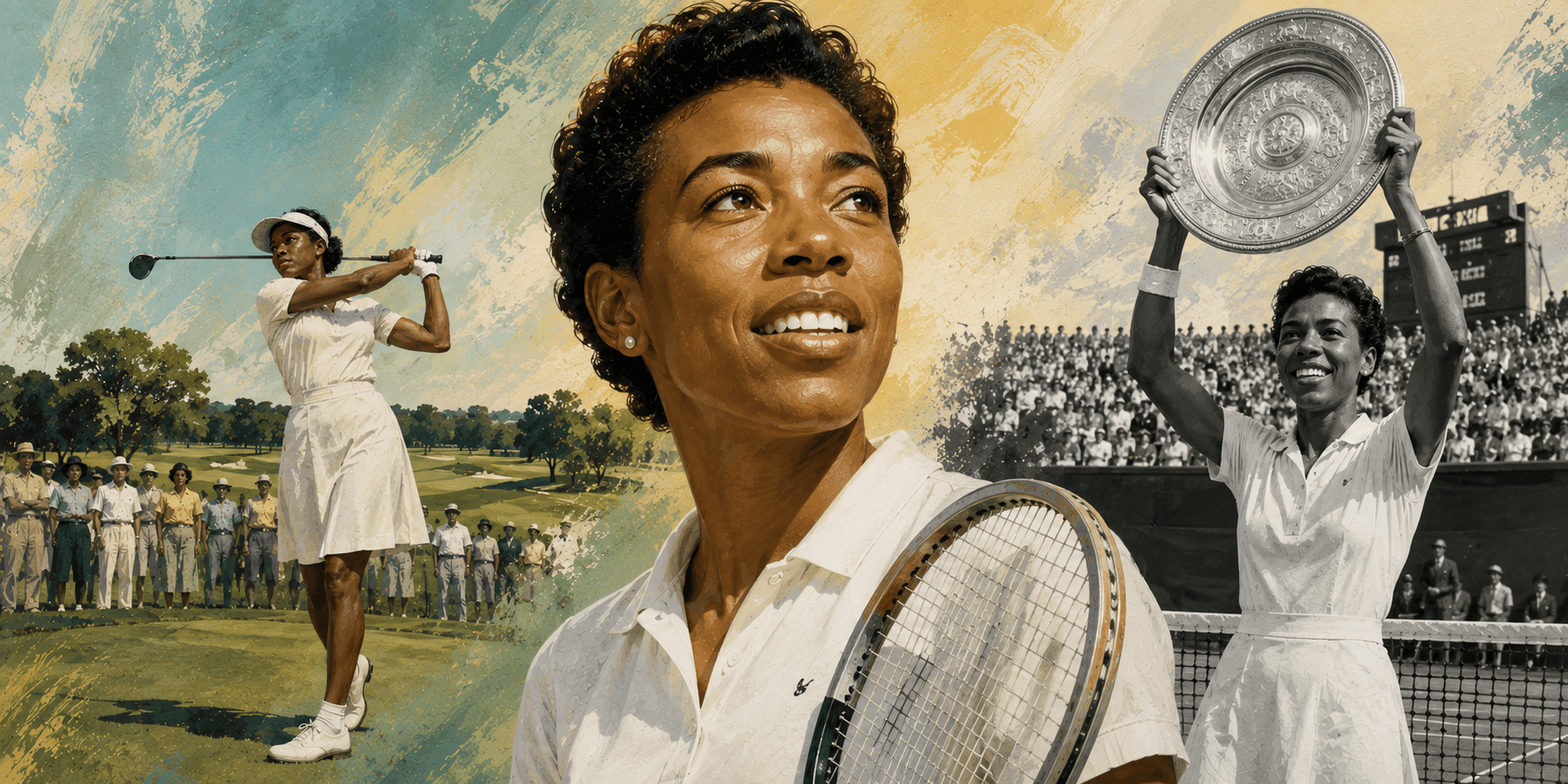
Most people remember Althea Gibson as a tennis legend. Fewer know she also became the first Black woman to compete on the LPGA Tour, breaking another barrier and opening doors for generations of Black women golfers.
Detroit Jazz Festival 2026 Guide
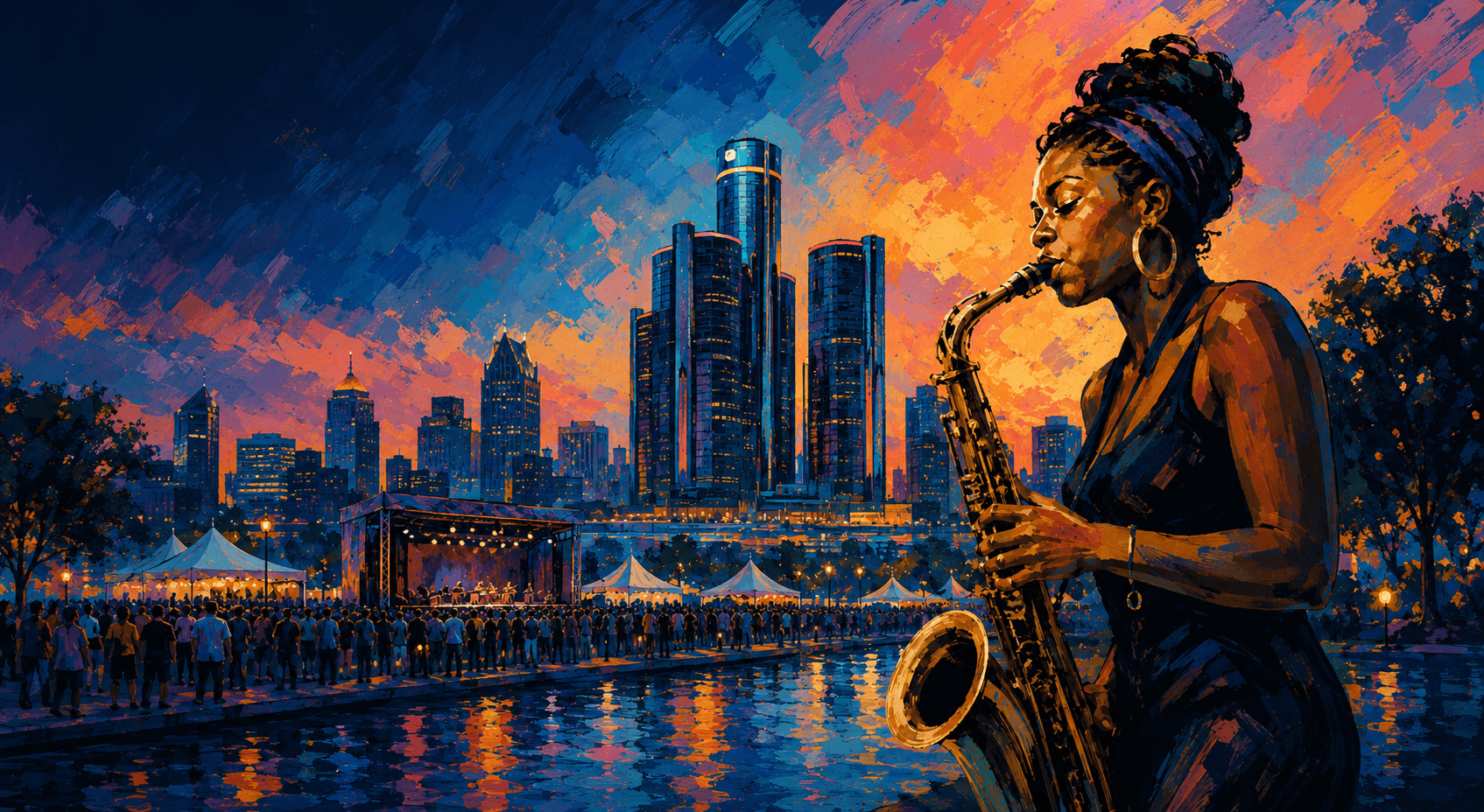
A local guide to navigating the Detroit Labor Day weekend jazz celebration.
Help Us Get It Right
This coverage is a community project.
Spot something outdated? Know a person, business, or organization this story should connect to? A story we should tell next? It goes straight to our editors — privately.