
Faith + Family
Tips For How to Build Your Credit
March 25, 2011·By BLAC Editorial
A college student needs help building up her credit
March 25, 2011
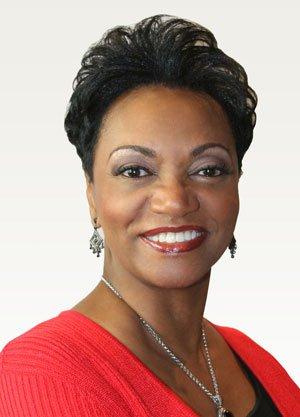
e are thrilled that Glinda Bridgforth, a Detroiter and a nationally renowned financial expert with three decades of experience, has become part of the B.L.A.C. team. She answers your questions about money. For more information on our magnificent money coach, visit www.GlindaB.com.
B.L.A.C. Reader: I’m a college student and I’m trying to build my own line of credit, but my parents keep telling me I’m going about it all wrong. In the past year, I’ve used my card only to make big purchases on items such as a laptop, text books and television. I’ve been told that if I don’t have the money by the next month, then I shouldn’t buy the item at all, but I pay more than the minimum payment each month, along with additional payments in-between billing dates to lower the remaining balance. What am I doing wrong and what can I do to correct it?
Bridgforth: I can understand your parents’ concern about carrying debt month to month. But I also know it is valuable to establish a credit history, and you can only do that by utilizing credit. Unfortunately, credit has gotten a bad rap. It is blamed for a multitude of problems in our personal and professional lives. Well, news flash: credit is good! It is the abuse of credit that is the problem.
It does not sound like you are abusing it, but here is what I’d be interested in knowing. What is the total amount of debt you currently owe? What is your interest rate? And what is your credit limit? These are all important factors. Given the items you purchased-a laptop, text books and television-you could be carrying a balance of $5,000. That is a pretty substantial amount for a college student.
According to Bankrate.com, if your interest rate is 21.99 percent and it takes 12 months for you to pay it off, you would need to pay $467.95 monthly and could end up paying $1,099.50 in finance charges alone. You should always consider the true cost of using credit based on the total amount of interest you pay on your balance annually. What else could you do with that $1,099.50? Perhaps pay cash for your text books next semester?
Your strategy of paying more than the minimum and making payments in-between billing cycles is a good one. In the future, I would recommend you make purchases of the above items individually and pay the balance off before making the next purchase. Otherwise, if you are making a large purchase, consider using an installment loan through your financial institution. These loans are set up for equal payments for a specific number of months. That way you know in advance when the balance will be paid off. Also, it may carry a lower interest rate than your credit card. For example, some credit unions now offer an interest rate of 14 percent.
You should also understand what makes up your credit score. The FICO score is used by 90 percent of major lending institutions and has a range of 300 to 850. Here are the components that make up your credit score, the percentage of weight each has on your credit score and what you can do to improve your score.
| Payment History | 35 percent | Pay all of your bills on time |
| Amount Owed | 30 percent | Lower interest rates and pay more than the minimum |
| Length of History | 15 percent | Keep older accounts open |
| New Credit | 10 percent | Minimize new applications and inquiries |
| Types of Credit | 10 percent | Use variety of credit, i.e. mortgage, auto, credit cards |
Today, we need good credit more than ever-not only to obtain low interest rates and insurance premiums, job opportunities, for purchasing ease and convenience, but for safety, too. Imagine using cash to fly to another city, rent a car, check into a hotel and pay for meals and entertainment. How many of us would have the money to do that? Besides, even if you had the money, would you feel comfortable traveling with all that cash? I know I wouldn’t.
GLINDA BRIDGFORTH IS THE DETROIT-BASED AUTHOR OF “GIRL, GET YOUR CREDIT STRAIGHT!” AND OTHER FINANCE BOOKS, AND THE FOUNDER OF BRIDGFORTH FINANCIAL AND ASSOCIATES, LLC.
 Email
Email Print
Print
Every question deserves a better answer than a search result — here's where this story leads.

Why Every Metro Detroit Nonprofit Should Be Thinking About AI
How a local workshop is helping nonprofit leaders turn curiosity into practical action. For many nonprofit leaders, artificial intelligence still feels like something meant for Silicon Valley or Fortune 500 companies. It isn’t. Whether your organization has three employees or three hundred, AI is quickly becoming another tool that can help teams spend less time […]

Althea Gibson’s Second Act
Most people remember Althea Gibson as a tennis legend. Fewer know she also became the first Black woman to compete on the LPGA Tour, breaking another barrier and opening doors for generations of Black women golfers.

Detroit Jazz Festival 2026 Guide
A local guide to navigating the Detroit Labor Day weekend jazz celebration.
Help Us Get It Right
This coverage is a community project.
Spot something outdated? Know a person, business, or organization this story should connect to? A story we should tell next? It goes straight to our editors — privately.