
News + Features
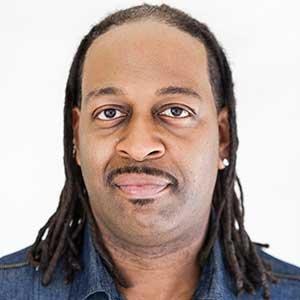
Southfield Resident Darryl Thomas on Surviving Colon Cancer
May 6, 2015·By BLAC Editorial
A colon cancer diagnosis can be devastating, especially without health insurance. But care from John Barnwell, M.D of DMC made a difference.
May 6, 2015
Content brought to you by Detroit Medical Center
arryl Thomas of Southfield was only 40 years old with what he considered minor symptoms when he first heard the words "cancer diagnosis." Blood in his stool and a general feeling of fatigue were what first brought him to his doctor in late spring 2010 for a checkup.
"My primary care doctor thought it was just hemorrhoids and sent me home with suppositories," Thomas recalls. "When this failed to address the problem, he referred me to Dr. Barnwell."
John Barnwell, M.D., a general surgeon and surgical oncologist at DMC Sinai-Grace Hospital, was the one to share with Thomas the results of Thomas' colonoscopy: colon cancer.
"I remember the date clearly," Thomas says. "It was July 6, 2010. I had no insurance, and I didn't know what I was going to do. Yet I remember Dr. Barnwell saying, 'Let's focus on getting you better first and worry about the rest later.'"
Dr. Barnwell also remembers the situation clearly. "Darryl came to me with no insurance and a complete colonic obstruction," Dr. Barnwell recalls. "I couldn't turn him away. I have treated people for free many times in the past when a Medicaid provider wouldn't pay or a patient simply had no insurance. Ethically, that's what you have to do. That's why you take the oath."
Fortunately, not long after Thomas first saw Dr. Barnwell, a DMC hospital advocate helped him apply for health insurance coverage.
"I tried for Medicaid first and eventually was able to enroll in Medicare," Thomas says.
An initial surgery revealed that Thomas' tumor was too vascular to remove without first shrinking it down. Therefore, Dr. Barnwell recommended his patient undergo six weeks of chemotherapy and radiation before attempting the surgery again. Upon completion of these treatments, Thomas took another five weeks to rest and heal before he was headed back to the operating room.
"During the second surgery, Dr. Barnwell was able to remove the tumor," Thomas recalls. "It had shrunk enough for him to operate."
These days Thomas is cancer free and feeling well. "There are still some residual effects from the chemo," Thomas acknowledges, "but I'm feeling very strong overall. I tell everyone I know about Dr. Barnwell and his staff. They saved my life."
Thomas is now back to work part time and just recently signed up for the Healthy Michigan Plan, so that future medical care for any preventive health measures will be covered. He never again wants to find himself needing medical care but having no way to pay for it. Even with his cancer history, Thomas was able to enroll for coverage. The Healthy Michigan Plan does not deny coverage to individuals with pre-existing conditions.
"Whether or not you're a fan of Obamacare, it is enabling people to access care sooner," Dr. Barnwell says. "Disease can be prevented or caught early, so that it doesn't advance."
Dr. Barnwell notes that he used to routinely see four or five uninsured patients each week in the emergency room when he would take call.
"Now, that figure is more like four to five patients every two to three months," he says. "As soon as patients come in, they're connected with a social worker who is aggressive about getting them signed up for coverage."
Dr. Barnwell attributes much of this change to DMC Chief Administrative Officer Conrad Mallett Jr., who is leading the DMC charge to get patients signed up for the Healthy Michigan Plan.
"He's doing an incredible job," Dr. Barnwell says.
One man in particular would agree.
"I have been 100-percent satisfied with my DMC experience," Thomas says. "The entire staff was wonderful."
Every question deserves a better answer than a search result — here's where this story leads.

Why Every Metro Detroit Nonprofit Should Be Thinking About AI
How a local workshop is helping nonprofit leaders turn curiosity into practical action. For many nonprofit leaders, artificial intelligence still feels like something meant for Silicon Valley or Fortune 500 companies. It isn’t. Whether your organization has three employees or three hundred, AI is quickly becoming another tool that can help teams spend less time […]

Althea Gibson’s Second Act
Most people remember Althea Gibson as a tennis legend. Fewer know she also became the first Black woman to compete on the LPGA Tour, breaking another barrier and opening doors for generations of Black women golfers.

Detroit Jazz Festival 2026 Guide
A local guide to navigating the Detroit Labor Day weekend jazz celebration.
Help Us Get It Right
This coverage is a community project.
Spot something outdated? Know a person, business, or organization this story should connect to? A story we should tell next? It goes straight to our editors — privately.