News + Features
Soul on Bikes
June 1, 2012 · Updated March 6, 2019·By BLAC Editorial
Thousands of Detroit’s black motorcyclists ride for the freedom, fun and friendships
June 1, 2012 · Updated March 6, 2019
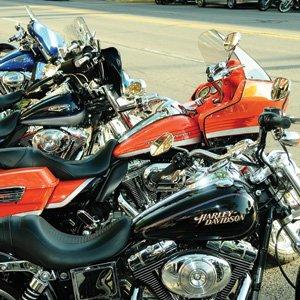
You can’t help but stare as Darrell Jones thunders down Main Street in Royal Oak in a flash of chrome and cobalt blue. Heads turn to check out his 2012 Harley-Davidson Road Glide Screaming Eagle.
Admirers watch as he and two buddies park alongside dozens of motorcycles in front of Mr. B’s restaurant, the Wednesday and Thursday night hotspot for fellowship and to flaunt chrome and motor power.
“The bike is an extension of your personality,” says Jones, 47, of Southfield, pointing to his custom wheels and paint design around double headlights, part of $40,000 worth of customization. “Your bike lets you show off your creativity. It’s like an obsession under your foot.”
It’s an obsession passed down from his late father, Calvin Jones.
“My dad started me out riding a Honda when I was 8. Before 1994, I was riding sport bikes – Kawasakis, Suzukis, and Yamahas,” says Jones, standing beside his dad’s bike that he inherited – a red, chromed-out 1999 Harley Road King with an ostrich seat. His cousin, Lim Jones, 48, a Detroit plumber, rode it that night. “We even have Doppler radar on our phones so we can watch the weather and know when to ride.”
These guys are part of a national phenomenon of African Americans who are living a motorcycle culture that’s all about freedom, friendship and flaunting the hottest bikes in the cottage industry that is generating more than $500 million in sales. Here in Metro Detroit, they are most visible on Main Street in Royal Oak, and on Belle Isle and beside Fuddruckers on Jefferson at Chene in downtown Detroit.
“African Americans are all about style,” says John Comissiong, director of African-American outreach marketing for Harley-Davidson Motor Co. “They spend more… to accessorize their motorcycles than any other group. It’s the personal expression of your style.”
Now they’ve got one more way to express themselves: with or without a helmet. In April, Michigan modified its helmet law; wearing one is optional for anyone over 21 with two years of experience and a driver’s license endorsement, as well as $20,000 worth of insurance.
“I love the new helmet law,” says Jones, wearing a Harley baseball cap – no helmet. “Riding is the open road to freedom, and the helmet law gives people freedom of choice.”
Motorcycles are becoming the must-have status symbol among African Americans.
“Harleys… go hand in hand with status,” says LaToya “Pink” Broadus, 35, who customized her pink Harley-Davidson with the paint job and a pink alligator seat.
She’s all about the bling, sometimes riding with silver, high-heeled boots or sparkly pumps. “I also changed out my handlebars, added bags, chromed my rims and added a couple chrome pieces to my engine.”
LaToyia “Mz. Unstoppable” Farmer, 26, of Detroit, spent about $20,000 customizing her Kawasake ZX9, although she knows a sale would yield only $5,000.
But her pink Detroit-themed bike-featuring the late Coleman A. Young, the Joe Louis fist, the Spirit of Detroit, the Detroit riverfront, Motown singers and even former Detroit Mayor Kwame Kilpatrick behind bars-is a head turner like the Dymond Candy Ryderz, a six-woman group she leads.
“People have a lot of bad things to say about Detroit. I’m in this city and I love. I don’t want to live anywhere else,” says the 26-year-old Detroiter just hours before leaving for the nation’s largest Black bike rally. “When I’m in Myrtle Beach, everyone is going to know I’m from Detroit.”
This trend is not exactly new; it’s just more visible in pop culture and in Metro Detroit, at high-profile hangout spots in Metro Detroit.
“In motorcycle magazines, you see more and more African Americans highlighted… builders or Joe Blow off the street who invested money and time to create this masterpiece of a motorcycle,” says Comissiong. “And you’re seeing an extension of that in mainstream music videos that highlight biker culture, like Super High by Rick Ross featuring Ne-Yo.”
Biker Boyz, the 2003 movie starring Laurence Fishburne, Derek Luke and Kid Rock, does the same. Real bikers can watch it dozens of times and never tire of it.
“When I saw that movie, I immediately decided I wanted a bike,” says Ross Wallace, 30, of Detroit. The U.S. Army captain bought a Yamaha YZF-R1 sport bike on eBay for $2,700.
“I didn’t know how to ride, so I taught myself. I immediately started hanging out with people around Detroit. It’s a real friendly community. When you’re riding, other bikers stick their fingers out and give you a peace sign or a ‘what’s up?’ nod.”
Fuddruckers or “HQ” is his favorite place to meet other riders. “Most of the people, I couldn’t even tell you their names, but I could tell you what type of bike they have and… if they’re cool or not.”
Wallace, who served two tours in Iraq, has a Yamaha 2006 R1 Blue-The Blue Bomber-rides with a soldier club, The Links.
Dante “Triple D” Delorey, 29, of Port Huron, says: “I’ve always thought motorcycles were cool, but when I watched this Usher video called Nice and Slow, he got this slick bike and he rolled out with a girl. I said, ‘That’s gonna be me.’”
Delorey, who rides an orange and gray 2010 Honda CBR1000RR, had another motivation: “It costs me $80 to fill up my (1995) Cadillac. I can put $18 in my bike and still look sharp. That takes me 160 miles. I ride it to work every day.”
Brothers of the Bike, a video celebrating Black biking history and culture, was launched on Harley-Davidson’s website. This year, an exhibit opened at its Milwaukee museum called Journey of the Iron Elite.
Documenting Black riders back to 1913, it celebrates pioneers in Black biking culture. Willie B. Johnson was the first African American to own a Harley dealership in New York in the early 1900s. Bessie Stringfield was the first woman who rode a motorcycle alone across the country. And Benny Hardy built the world’s most famous motorcycle, Captain America, for the 1969 movie Easy Rider.
“The African-American biker scene is filled with visionaries, artists, revolutionaries and brave mavericks who have stuck their heads out and done things to pave the way for bikers in their footsteps and made an impact on the Harley brand in general,” says Amanda Lee, Harley-Davidson’s public relations outreach manager.
This online tribute explains that Harleys became popular with Blacks after World War II when Black infantrymen were “hungry to replace the adrenaline rush of combat.” They bought low-cost surplus bikes during segregation when some dealers refused Black customers.
Many motorcycle clubs formed, including Oakland, Calif.’s East Bay Dragons, founded by Tobie Gene Levingston in 1957, a revolutionary time for a Black man to ride a Harley chopper.
“African Americans have been riding Harleys a long time,” says Levingston, 77, who keeps his 1999 motorcycle “Old Girl” in the garage and hopes to ride when his health improves. The customized Ultra Classic has saddlebags, balloon tires and leg warmers.
“I don’t ride a Harley because it’s the best motorcycle in the world,” he says. “I ride it because it’s made in America and keeps jobs here.”
Levingston, who wrote the 2004 book, Soul on Bikes: The East Bay Dragons MC and the Black Biker Set with Keith and Kent Zimmerman, tells new generations of riders: “Safety is the most important thing. I don’t understand why people wouldn’t want to wear a helmet. Gloves are as important as the helmet, with good boots, chaps and a leather jacket. You have to be careful; don’t be foolish.”
Wallace, who was hit by a car in 2004 and broke several bones, agrees.
“A helmet saved my life,” he says. “My helmet was ground down. I slid 300 feet. It was cracked, falling apart inside, but my head was perfect. And I was wearing my riding boots, thick pants, leather jacket with back protector, gloves and helmet. I wear it every time.”
Likewise, Delorey says, “The helmet law? Forget that! I wear a helmet. I was on life support after a motorcycle accident two years ago. An old school Lincoln pulled out in front of me. I have rods in my leg and screws in my ankle. I was wearing a helmet and it got… grinded down, literally. It saved my life.”
Richard Washington, 69, an Eastern Michigan University professor who’s been riding 42 years, agrees.
“I always wear my helmet. I’ve been in three accidents,” Washington says in front of Mr. B’s, perched on his metallic brown, three-wheeler Harley Trike, which enables him to ride since hip surgery. Other bikers revere him as “one of the original Black bikers in Detroit” as he cranks his riding theme song, The Ghetto by Donnie Hathaway. “Twice, my helmet ground down from friction with the road. It saved my life.”
Ron Jackson, business manager of the 20-member Detroit Harley Boyz and Girls motorcycle club, adds: “We’re trying to teach the younger riders… how you manage to get to my age without missing a limb or having a knee blown out and replaced with artificial kneecaps because you’ve gone down at 80 miles per hour.”
Jackson, 55, who retired after 31 years as a General Motors engineer and rides a 2012 Harley Road Glide, says: “Everybody likes a little speed, but you have to do it in a controlled way so you can ride the next day.”
Broadus has another rule: “Never drink and ride.”
So how can the popularity of Black biking be quantified?
“We got over 10,000 bikers in Detroit who are Black,” says Darryl Mack, 51, who owns Big Mack’s Motors Motorcycle Towing & Hauling in Detroit and started the business to support the burgeoning numbers of bikers.
“I guarantee that they are putting more money into their bikes than other races,” says Mack, who rides a 2005 Deluxe Soft Tail Harley with the Motor City Peace Keepers. He loves biking so much that three years ago, he convinced his doctor to delay his prostate cancer surgery to allow him to ride out the summer season.
“They want their bike to be the baddest. They want their bike to be the fastest. I’d say, within two years, the average biker puts in $100,000.”
That includes customization, gear and trips to Black Bike Week in Myrtle Beach, S.C., and the National Bikers Roundup in Ennis, Texas-just outside Dallas. Locally, Detroit Bike Week attracts thousands of bikers.
“It’s a multiracial, diverse event,” says spokesman Matt Flynn, after the Blessing of the Bikes in Baldwin, Mich., which drew 10,000 bikers on May 20. “There’s no color when it comes to bikes.”
Levingston agreed. “Most bike riders in America, they don’t have no problem with each other. They shake hands and say, ‘Where you goin’? Where’d you come from?’ You can always meet some friendly guys. They don’t see color, whether you are Black or white, yellow or brown.”
The growing popularity of the Harleys among African Americans shows a 25.5 percent increase in Harley-Davidson motorcycle retail sales in 2011 from 2010, according to the company’s website.
“In 2011, for the fourth straight year, Harley-Davidson was the U.S. market share leader among young adults ages 18-34, women, African-American and Hispanic riders, as well as among its core rider group,” says its annual report. And the U.S. market share for Black men and women older than 35 jumped from 40.8 percent in 2007 to 53.1 percent in 2011, while the nearest competitor’s market share was just 10 percent.
“When I got my bike, I couldn’t find anybody with a Harley to ride with,” says Broadus, a truck driver, real estate agent and nursing student whose father bought her the bike in 2005 when her girlfriends rode sports bikes or “crotch rockets.” “Now Harleys are popping up everywhere. They even got a Black guy in a Harley-Davidson commercial now. I love it!”
As one of three women in the Detroit Harley Boyz and Girlz Motorcycle Club, Broadus cherishes the friendships: “If I’m going somewhere on my bike, I’ll call one of the Boyz and they’ll come and pick me up and at the end of the night and ride with me back home.”
The club cultivates a positive image for bikers. It donated gifts to a Detroit family that lost an infant and the baby’s mother within two days.
Detroit’s Fox 2 News broadcast a story in December 2010 showing President Melvin Davis leading members into the family’s home with gifts and a Christmas tree.
“We want to extend our hand out to them and say … Anything you need done to get you through this time, Detroit Harley Boyz and Girlz is there,” Davis said.
“Motorcycle culture is so exciting,” Comissiong says, “Bikers know they have the greatest secret in the world.”
Elizabeth Atkins is a local author, screenwriter and freelance journalist.
Every question deserves a better answer than a search result — here's where this story leads.
Why Every Metro Detroit Nonprofit Should Be Thinking About AI
How a local workshop is helping nonprofit leaders turn curiosity into practical action. For many nonprofit leaders, artificial intelligence still feels like something meant for Silicon Valley or Fortune 500 companies. It isn’t. Whether your organization has three employees or three hundred, AI is quickly becoming another tool that can help teams spend less time […]
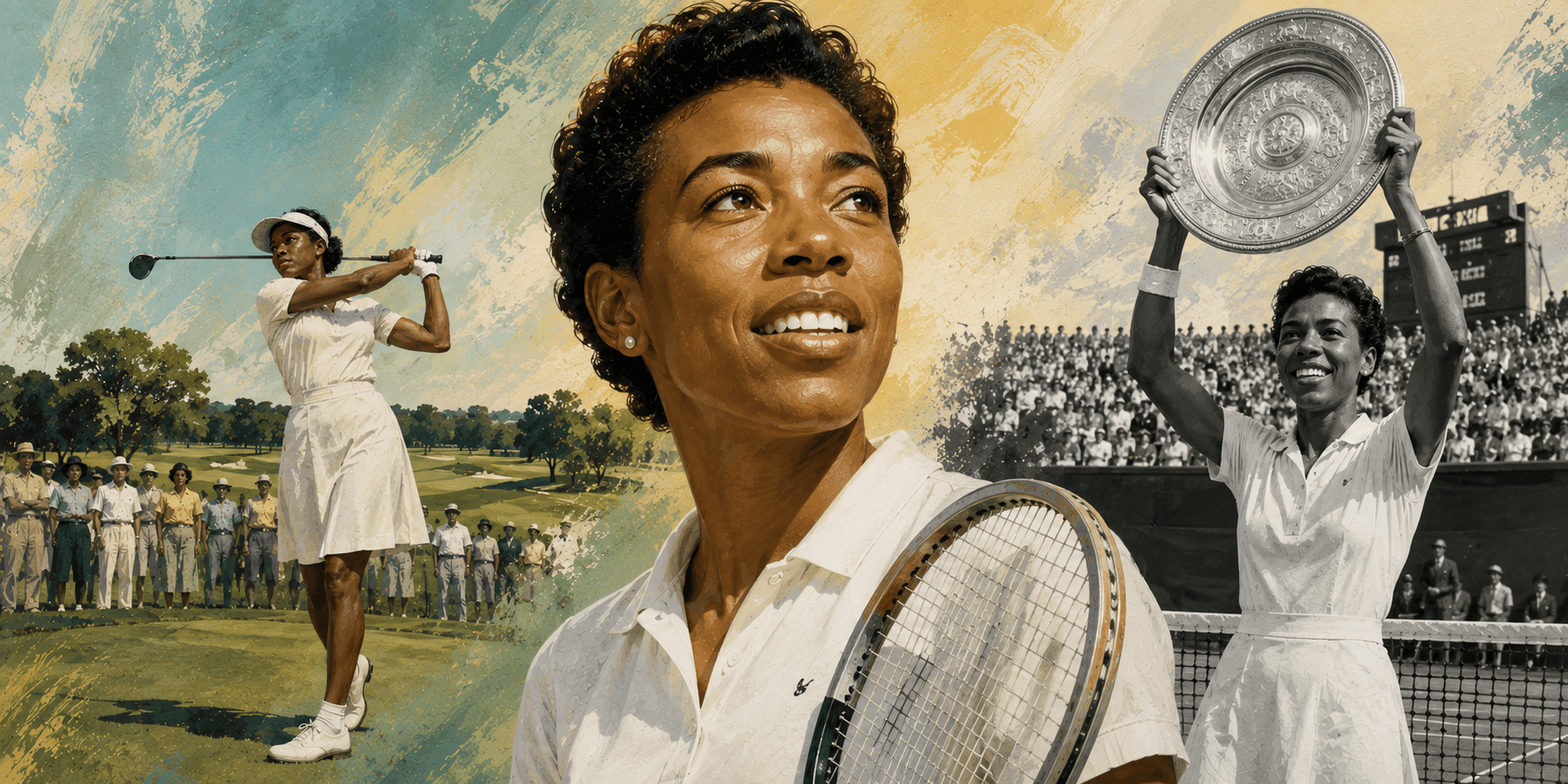
Althea Gibson’s Second Act
Most people remember Althea Gibson as a tennis legend. Fewer know she also became the first Black woman to compete on the LPGA Tour, breaking another barrier and opening doors for generations of Black women golfers.
Detroit Jazz Festival 2026 Guide
A local guide to navigating the Detroit Labor Day weekend jazz celebration.
Help Us Get It Right
This coverage is a community project.
Spot something outdated? Know a person, business, or organization this story should connect to? A story we should tell next? It goes straight to our editors — privately.