Health + Beauty
Smoking or Non? You’ll Pay, Regardless
August 16, 2012·By BLAC Editorial
Your tax dollars at work, ladies and gentlemen.
August 16, 2012
arlier this week, Australia’s high court upheld the landmark antismoking law passed in the country last year.
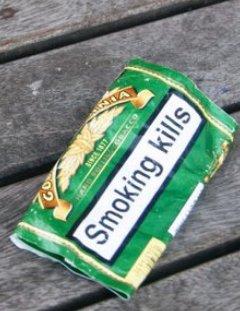
The law forbids any brand packaging or trademarks on cigarettes and replaces them with olive green packets that feature graphic health warnings and grizzly images of cancer-riddled mouths, blinded eyeballs and sick children. The point of all this is to reduce the rate of smoking in the country where, as of 2007’s figures, the rate was 19 percent, on par with the U.S. rate of 20 percent.
The goal of the law is to make it pointless for tobacco companies to advertise. The thinking goes, if you can’t see the logo, you won’t care what brand you buy. If you don’t care what brand you buy, tobacco companies have no reason to advertise.
Given that tobacco companies have a history of banding together-in 1954 they formed the Tobacco Industry Research Committee to fight that vicious little rumor that cigarettes caused lung cancer together-there’s no doubt they will be in cahoots again to foil the doomsayers. But the law is sure to have an effect.
More than just public health, fighting cigarette addiction has been something of a fiscal prerogative for governments.
Since funding from the Master Settlement Agreement-originally a 25-year deal signed in 1998 for $365 billion paid from the tobacco companies to states that got watered down to $205 billion-has not been enough to remedy the costs of smoking, countries have been a in a mad dash to further decrease smoking rates.
The costs of smoking don’t just affect just the smoker. Here, in the U.S., total public and private health care expenditures caused by smoking are $96 billion a year. In Medicaid payments, federal and state governments are spending $30.9 billion (federal share: $17.6 billion per year; states’ share: $13.3 billion).
There’s also $27.4 billion in smoking-caused Medicare expenditures each year and other expenditures, like VA health care, that add an additional $9.6 billion each year. Not to mention the $4.98 billion the government spends on secondhand smoking exposure.
The $205 billion from the MSA has barely sniffed at these costs. To add it all up, taxpayers yearly federal and state tax burden from smoking-caused government spending is $70.7 billion or $616 per household. Your tax dollars at work, ladies and gentlemen.
But don’t expect to see anything like the Australian law passed here. The smoking lobby is too strong and after the fight the tobacco companies put up against the MSA in the ‘90s, no one wants to take them on again.
A few states like California, New York and Massachusetts may attempt something similar, but the chances of a federal law getting passed are slim to none.
 Email
Email Print
Print
Every question deserves a better answer than a search result — here's where this story leads.

Why Every Metro Detroit Nonprofit Should Be Thinking About AI
How a local workshop is helping nonprofit leaders turn curiosity into practical action. For many nonprofit leaders, artificial intelligence still feels like something meant for Silicon Valley or Fortune 500 companies. It isn’t. Whether your organization has three employees or three hundred, AI is quickly becoming another tool that can help teams spend less time […]

Althea Gibson’s Second Act
Most people remember Althea Gibson as a tennis legend. Fewer know she also became the first Black woman to compete on the LPGA Tour, breaking another barrier and opening doors for generations of Black women golfers.

Detroit Jazz Festival 2026 Guide
A local guide to navigating the Detroit Labor Day weekend jazz celebration.
Help Us Get It Right
This coverage is a community project.
Spot something outdated? Know a person, business, or organization this story should connect to? A story we should tell next? It goes straight to our editors — privately.