
People + Places
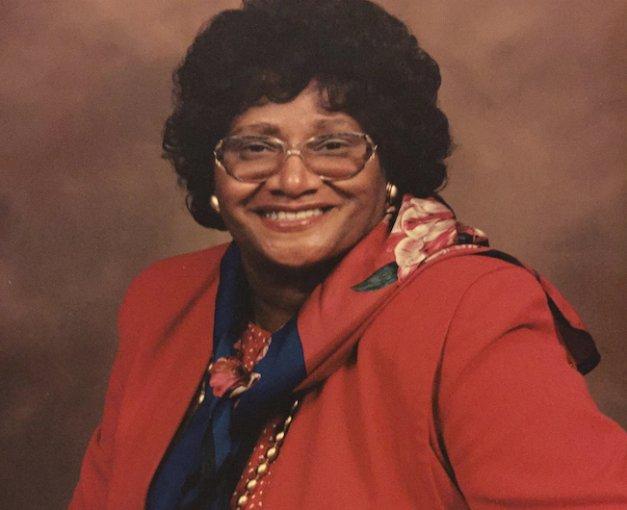
Remembering ‘mother of the North End’ Delores Bennett
March 7, 2017·By BLAC Editorial
A pillar of the eastside Detroit neighborhood, Bennett leaves behind an immeasurable legacy.
March 7, 2017
hen Delores Bennett spoke, the North End listened.
The “mother” of the eastside Detroit neighborhood firmly established herself as a mentor, giver and ambassador for the community around her. There is no one there that doesn’t know her name or isolated from her work there.
Bennett died Feb. 6 at age 84. For most of her life, she lived at a home on King Street, the base of operations for much of her charity. The North End has suffered the brunt of Detroit’s economic turmoil over the last few decades. Bennett’s life’s work was holding the neighborhood together.
“There’s an African proverb that says it takes a whole village to raise a child,” says Margaret Harris, a North End resident who worked under Bennett’s tutelage since she was a teenager. “She taught the value of giving back to yourself by giving back to your community.
“She’d say, ‘Go to school. Be somebody. Get your education. Go to college, and give back to your community,’” Harris says. “She taught us that not one person was better than another person.”
Bennett was instrumental in a summer jobs program for North End youth in the 1960s that morphed into the North End Youth Improvement Council, which Bennett maintained in the decades since. She served on the Wayne County Board of Commissioners in the 1970s and frequently lobbied whoever she could – then-Mayor Coleman Young included – to steer resources to the North End.
At that time, Harris says, one of Bennett’s missions was to clean up a park and playground in the neighborhood at the corner of Smith and Beaubien streets. Bennett spoke one-on-one to gang members in the area that frequented the park. “If it weren’t for Ms. Bennett talking to them gangs, this neighborhood would be messed up,” Harris says.
Gang wars were a frequent issue for the North End well into the 1990s. Bennett was featured on national news, Harris says, as a role model who stepped in to stop the violence. “If it wasn’t for Delores Bennett, I think we’d have more crime.”
Another hallmark of Bennett’s legacy is the Adopt-a-Child Christmas program, an offshoot of NEYIC in which low-income youth are given gifts, clothing and other essentials at Cobo Center each year. It started, according to a story from Bennett, after a despondent young mother more than 50 years ago told Bennett she’d rather kill herself than deprive her children of Christmas gifts. Bennett and her husband provided gifts for the family.
“Her priorities were always the well-being of the kids,” said Tyson Gersh, a friend of Bennett and president and co-founder of the Michigan Urban Farming Initiative. “That was her life. The way that she inspired, mobilized and created a community was really incredible. I’ve probably met about 100 people that have introduced themselves to me as ‘Mrs. Bennett is my grandma’ or ‘Mrs. Bennett is my mom or my aunt.’”
Indeed she was. “Every day, she talked about the Lord and her children,” Harris says. “Her number one was the children. She’d say, ‘Don’t look down. What’s down on that ground ain’t nothing but dirt and your feet.’”
Beyond the cleaned-up park at Smith and Beaubien that bears Bennett’s name, North Enders are ensuring that her legacy won’t be lost to history. “We’re going to keep her dream up, her vision up,” Harris says. “We’re going to do anything possible to keep her remembered.”
AARON FOLEY IS EDITOR OF BLAC. BLAC ASSOCIATE EDITOR ALANA WALKER CONTRIBUTED TO THIS STORY.
Every question deserves a better answer than a search result — here's where this story leads.

Why Every Metro Detroit Nonprofit Should Be Thinking About AI
How a local workshop is helping nonprofit leaders turn curiosity into practical action. For many nonprofit leaders, artificial intelligence still feels like something meant for Silicon Valley or Fortune 500 companies. It isn’t. Whether your organization has three employees or three hundred, AI is quickly becoming another tool that can help teams spend less time […]
Althea Gibson’s Second Act
Most people remember Althea Gibson as a tennis legend. Fewer know she also became the first Black woman to compete on the LPGA Tour, breaking another barrier and opening doors for generations of Black women golfers.

Detroit Jazz Festival 2026 Guide
A local guide to navigating the Detroit Labor Day weekend jazz celebration.
Help Us Get It Right
This coverage is a community project.
Spot something outdated? Know a person, business, or organization this story should connect to? A story we should tell next? It goes straight to our editors — privately.