
Art + Culture
Othalie Graham talks Opera, Turandot at Detroit Opera House
May 6, 2014·By BLAC Editorial
The world-renowned singer voices her opinion about roles for African-Americans in opera and why she relates to Chinese Princess Turandot
May 6, 2014
here are few roles written for African-American opera singers.
In fact, “Are there any written for Black people other than Aida?” asks opera diva Othalie Graham, in a rhetorical timbre. “Other than Porgy and Bess, I can’t think of any other roles at all.”
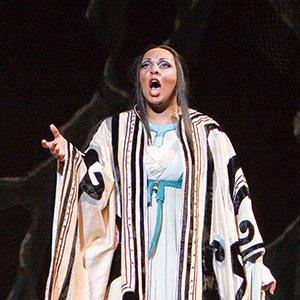
And yet Graham has been able to shape a special roster of singing parts that specifically fit her grand vocals, such as her upcoming frequented and favorite role as the titular icy Chinese princess in Turandot, performed at the Michigan Opera Theatre this month.
“With opera it’s different, because they have to also consider the voice. Are you the right voice type for that job,” explains Graham, who is a dramatic soprano-an emotive vocal style that is distinguished for its ability to be heard over a full orchestra. “There have been Black opera singers from the late 1800s, so certainly we have always sung all genres of music.”
She adds, “There aren’t a lot of characters that are specifically any race, really. Except my Chinese princess, of course.”
Turandot, a three-act opera, tells the story of an emotionally guarded princess who makes her suitors solve three riddles. At the failing of a question, their heads are cut off. “It’s all very dramatic,” says Graham, who admired the princess as a child.
“She’s very strong, but like a lot of women also vulnerable at the same time. So I’ve always admired her strength. And then admired her ability to fall in love and her inner fortitude,” says Graham. “I think her strength is something I identify with most. In order to be in this business, you have to have the skin of a rhinoceros. And under that we are still all very sensitive.”
Graham stars as Princess Turandot in the May 16 and 18 performances of Turandot, and she says the pivotal moment of the opera is when a stranger kisses her.
“It really completely melts her. He has the nerve to grab her and kiss her because he knows that under all (the tough exterior) is a woman. And when he kisses her, it really changes everything for her. It softens her and lights a fire within her,” Graham says.
“She has the opportunity to kill him and she doesn’t. She chooses love instead. This is the opera that people who have never been to an opera before will easily understand.”
Every question deserves a better answer than a search result — here's where this story leads.

Why Every Metro Detroit Nonprofit Should Be Thinking About AI
How a local workshop is helping nonprofit leaders turn curiosity into practical action. For many nonprofit leaders, artificial intelligence still feels like something meant for Silicon Valley or Fortune 500 companies. It isn’t. Whether your organization has three employees or three hundred, AI is quickly becoming another tool that can help teams spend less time […]

Althea Gibson’s Second Act
Most people remember Althea Gibson as a tennis legend. Fewer know she also became the first Black woman to compete on the LPGA Tour, breaking another barrier and opening doors for generations of Black women golfers.

Detroit Jazz Festival 2026 Guide
A local guide to navigating the Detroit Labor Day weekend jazz celebration.
Help Us Get It Right
This coverage is a community project.
Spot something outdated? Know a person, business, or organization this story should connect to? A story we should tell next? It goes straight to our editors — privately.