
People + Places
Frankie Darcell’s Fate
January 16, 2013 · Updated March 6, 2019·By BLAC Editorial
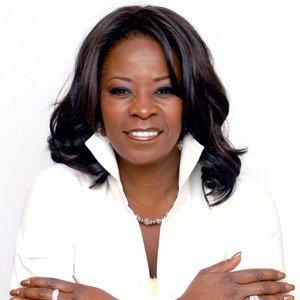
In early December 2012, Frankie Darcell was silenced. A longtime staple on Detroit’s radio scene, she was laid off, and much of Detroit was none-too happy about it.
January 16, 2013 · Updated March 6, 2019
In early December, Frankie Darcell got silenced.
A longtime staple on Detroit's radio scene, she was laid off, and much of Detroit was none-too happy about it. Her "Talk of the Town" segment was a must-listen on WMXD-FM (MIX 92.3). It was beauty shop fodder taken to the airwaves, and not everything was light and bright-in the thick of the first highly publicized Kwame Kilpatrick trial, she was the one who landed that infamous must-listen interview. Her show was heard in more than 20 markets-but Detroit was home to the girl originally from New York.
The 50-year-old broadcaster says she doesn't know what's next, but she's willing to bet she won't be off airwaves for much longer.
You're from New York, but you became the voice of Detroit. How did that come to be?
When I moved to Detroit, I was supposed to be here for three years. Detroit embraced me and I looked up and it's been 18 years. You know, there is a fight for Detroit when you live and love Detroit.
Why do you think that Detroit had that grab on you?
I felt that Detroit was one of the last Black meccas of America. With its population, when you look at just those in power and decision-making positions, it was really the information capitol for Black America. It became so easy to be able to get involved in what the trends of Black America were around the country-politically, musically, which was my piece. When I moved here and I met Anita Baker and Aretha Franklin-and these people were people I had access to-it was like, "Wow, where else in America can you do that?" Along the way, Atlanta became hot, but when I moved here in 1993 for me, entertainment, this is where you want to be. I remember going on the air one day and "Talk of the Town" started because I asked, "Where can I go get my hair done?" and the lines blew up. Then I said, "Where can I live?" And that's how I learned about the city of Detroit and I just learned to love it. And now people think I graduated from Cass Tech.
You were able to secure interviews that other media outlets couldn't get, like Kwame Kilpatrick. How'd you land it?
I'm gonna write a book one day on just how that interview came about! When we landed that interview, I was under scrutiny from other media professionals. I remember one of the newscasters saying to me, "You got that interview because you're a friend and you have a close personal relationship." I'm like, "Look, I play Rick James records and Anita Baker and give away concert tickets. My question is, as a journalist, how didn't you get the interview?"
For years, I knew Kwame Kilpatrick as a state rep. I was embedded in this community. As a Detroiter and as a professional, I would go to events. I was there when they were handing out turkeys to the homeless and, in the middle of the night when it wasn't popular and somebody died, I showed up at the hospital. I remember saying to him, "Man, you know, you always want me to show up at your turkey giveaways and I give you access, I need to bring some big interviews." I don't interview people who tell me, "Don't ask me this" or "Don't ask me that." He never did that.
When the news broke that you lost your job, there was instant outcry. Did that shock you?
When the first newspaper broke it, then it ended up becoming a tease on the noon news and because now of Twitter and Facebook and having the Internet in your hand, I thought, "Oh my God!" It was incredible. It exploded. I did not expect that. And it was my girlfriend who said, "But you know what, Frankie? Those are the people who you gave baskets to when they were unemployed for Thanksgiving and Christmas. Those are people who you walked with, and the sisters who you empowered who were fighting breast cancer." She said, "Don't feel sorry for yourself. You ain't the only one. You just need to get through this and watch your blessing."
So what's next for you?
It's only been four or five days and my phone has been literally ringing off the hook. Today it finally hit me that I've got to have a "what's next." The challenge for me is that I have a 16-year-old who is doing exceptionally well and she's in the 11th grade. I would love for her to be able to graduate from the high school that she attends. So my first goal is to see if that's a possibility. I am open to leaving Detroit. There are folk that have called me and said, "Yay! Hallelu! Let's talk!" And that's been great, because there are some great options-stuff I hadn't even thought about. I haven't said one way or the other, because I don't know what God is trying to do.
Every question deserves a better answer than a search result — here's where this story leads.

Why Every Metro Detroit Nonprofit Should Be Thinking About AI
How a local workshop is helping nonprofit leaders turn curiosity into practical action. For many nonprofit leaders, artificial intelligence still feels like something meant for Silicon Valley or Fortune 500 companies. It isn’t. Whether your organization has three employees or three hundred, AI is quickly becoming another tool that can help teams spend less time […]

Althea Gibson’s Second Act
Most people remember Althea Gibson as a tennis legend. Fewer know she also became the first Black woman to compete on the LPGA Tour, breaking another barrier and opening doors for generations of Black women golfers.

Detroit Jazz Festival 2026 Guide
A local guide to navigating the Detroit Labor Day weekend jazz celebration.
Help Us Get It Right
This coverage is a community project.
Spot something outdated? Know a person, business, or organization this story should connect to? A story we should tell next? It goes straight to our editors — privately.