
Art + Culture
DIA Acquires an Emma Amos Masterpiece
August 25, 2022 · Updated August 25, 2022·By Joshua Andrei Bon
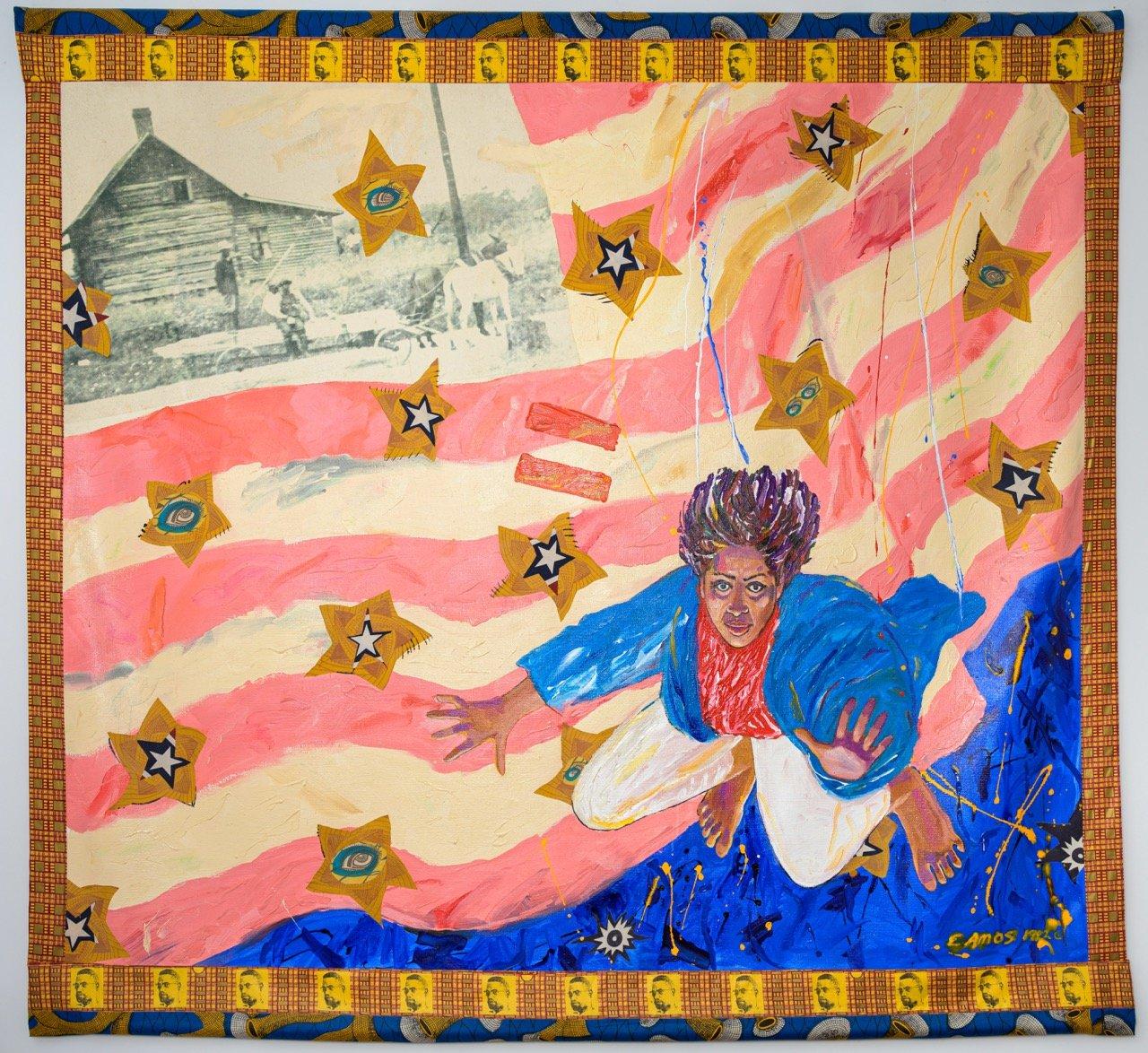
The DIA acquired the 1992 painting “Equals” by Atlanta-born artist Emma Amos. The work is part of the artists’s “falling figure” series.

August 25, 2022 · Updated August 25, 2022
A major piece by the late Atlanta-born Emma Amos, a notable figurative artist, has been bought by the Detroit Institute of Arts (DIA). The museum has acquired one of the representative pieces from the “falling figure” series that the artist created between 1988 and 1992 which then continued up to the twenty-first century. The painting “Equals” (1992) has been seen in the first significant retrospective exhibition of works by Amos, and it has also gained critical acclamations. As of writing, the painting is open for public view at the DIA.

“We are excited to add this extraordinary work by Emma Amos to our permanent collection,” Valerie Mercer, curator and department head of the DIA’s Center for African American Art. “When I first saw this piece while visiting with Amos in her New York City studio in the early 1990s, it immediately drew my attention because of its bold colors and powerful brushstrokes, and its dynamic depiction of bodies in free fall as a microcosm of racial and gender disparities in society.”
In “Equals,” Amos depicts herself as a girl hovering in midair against a massive American flag. A photograph of a Southern sharecropper’s modest home stands in the place of the U.S. flag’s field of stars. Throughout the entire composition’s edges, patches of African cloth alternates with printed pictures of civil rights icon Malcolm X. Stars were sprinkled all over the artwork and a giant red equal sign sits in the middle. Amos’ message of equality is important is condensed in the massive equal symbol. The artwork’s use of the colors red, white, and blue aids in conveying the idea that the United States is a varied country that should display sovereignty. The falling figure depicted in “Equals,” like in the other works in this series, represent the angst that Amos said African Americans felt as a result of feeling the impending loss of history, home and people.
The late artist who just died at the onset of the COVID-19 pandemic is a trailblazer. She’s an artist, educator and activist well-known for her bold, colorful and avant-garde works that explore race and gender in the American culture. Her artistic career spans more than six decades.
The DIA said in a press statement that it was the first major art museum in the U.S. to have a permanent collection of galleries and a curatorial department devoted to African American art. Since 2016, the museum has added to the collection over 80 works by African American artists: exhibiting and collecting works of art by important African American women, many of whom are not as well-known as their male counterparts.
Filed under
Every question deserves a better answer than a search result — here's where this story leads.

Why Every Metro Detroit Nonprofit Should Be Thinking About AI
How a local workshop is helping nonprofit leaders turn curiosity into practical action. For many nonprofit leaders, artificial intelligence still feels like something meant for Silicon Valley or Fortune 500 companies. It isn’t. Whether your organization has three employees or three hundred, AI is quickly becoming another tool that can help teams spend less time […]

Althea Gibson’s Second Act
Most people remember Althea Gibson as a tennis legend. Fewer know she also became the first Black woman to compete on the LPGA Tour, breaking another barrier and opening doors for generations of Black women golfers.

Detroit Jazz Festival 2026 Guide
A local guide to navigating the Detroit Labor Day weekend jazz celebration.
Help Us Get It Right
This coverage is a community project.
Spot something outdated? Know a person, business, or organization this story should connect to? A story we should tell next? It goes straight to our editors — privately.