Art + Culture
Breaking Boundaries: Detroit’s Black Queer Artists Shaping the Art World
May 12, 2023 · Updated May 12, 2023·By Cody Yarbrough
Explore the art of 5 exceptional Black queer artists from Detroit, giving voice to unique experiences & perspectives

May 12, 2023 · Updated May 12, 2023

The world of art often speaks volumes for marginalized groups, and Black LGBTQAI+ artists use it to voice their opinions. And when you’re a minority within a minority like Black LGBTQAI+ people, in might be your only release. That’s why Playground Detroit has partnered with us to highlight some of their Black queer artists. Many of the artists have their artwork showcased in the gallery or are available for purchase on Playground Detroit’s website. We encourage you to show support to all of the artists listed here and Playground Detroit for giving them a platform to express themselves.
Bakpak Durden
Bakpak Durden (they/them), uses their talents to help oppressed groups feel heard “without being interrupted.” Durden is a self-taught artist with a multitude of artistic abilities. From photography to oil and acrylic paint, they pull from their different disciplines to create art that not only represents the marginalized, but showcases their humanity.
The Detroit native uses their hyperrealistic techniques in combination with their surrealistic themes to highlight the trans, queer, neurodivergent, and disabled Black experiences. Their work has been showcased across the country, from the Paradigm Gallery in Philadelphia to the Playground Detroit gallery here in Michigan. Durden continues to live and create new art in their hometown on their ongoing mission to represent and inspire the marginalized.
FIFTY

Inspired by old black and white cartoons like Betty Boop and depictions of Black people from old anime like Dragon Ball, FIFTY (he/him) attempts to provoke his audience with his abnormal depictions of Black women. His paintings almost always depict one of more Black women with shapely bodies sporting a huge sambo smile on their face, fat lips wide eyes and all.

FIFTY’s “Sambo Princesses” aren’t just for shock value though. He takes the aspects from this racist way of depicting Black people and transforms it into something beautiful. Like African Americans have done multiple times in the past and present, FIFTY transforms the something that was made to oppress and mock Black people into something that lifts them instead. He takes the cute and “kawaii” aesthetic from his two main inspirations and applies them to the sambo caricature that they both indulge in and creates a princess. His work can be found on display throughout Metro Detroit and you can even purchase some of his art on Playground Detroit’s website.
Bre’Ann White
Bre’Ann White (she/her) has been capturing incredible images since 2010. She’s traveled the world with a camera around her neck, taking pictures of for multi-billion-dollar companies, platinum selling artist, global fashion brands, and her own artistic expression.

Capturing the individual and unique beauty of each of her muses, White uses her art as a way to empower and celebrate the beauty of other Black women like her. She uses her photography to challenge society’s perception of Black women and show her muses “how beautiful they are and how perfect their imperfection”. White hopes that her the sense of encouragement and empowerment from her art is felt by the audience as well, and that the beauty displayed will resonate with the viewers.
Julian Jamaal Jones
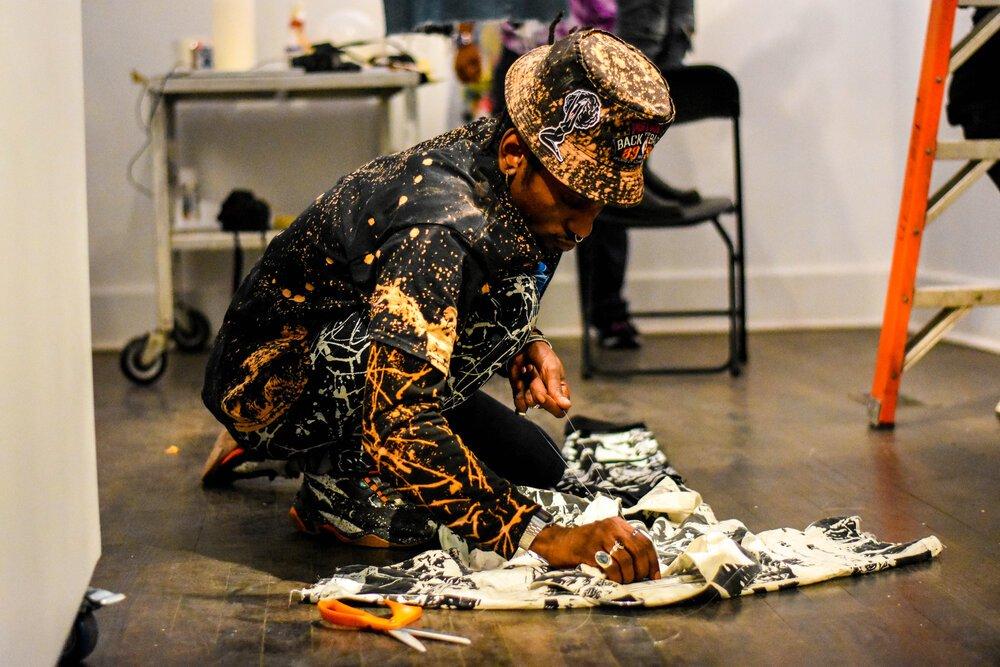
Julian Jamaal Jones (he/him) connects with his blackness through his art. Raised in Indianapolis, Jones grew up in an intensely white environment which left him often times feeling isolated. However, he would soon became enamored with the African American tradition of quilting after being exposed to the art form by his grandmother.
Today, Jones’s quilts are much more than just blankets for the bed. With painstaking detail, he creates quilts that pop with color and captivate the eye with their abstract design. His blend of old and new pays tribute to his culture while also recognizing the things that make him unique. His work is displayed internationally, and he currently teaches young artists at Herron School of Art + Design.
Lo Braden/Lo Cayne
Lo Braden/Lo Cayne (they/them) is using their art to challenge the idea of a monolithic Black identity. Through photography, Lo attempts to show all sides of Black people and Black culture, including aspects of gender, sexuality, and disability.
Much of their work focuses on portraits of single individuals. Much like James van Der Zee, they’re trying to capture heavily ignored sub-cultures in the city. But unlike the Harlem Renaissance photographer, Lo focuses on capturing the aura and energy of the subject as opposed to simply documenting it. Though current technology can’t quite encapsulate the concepts forming in Lo’s mind, by utilizing their knowledge of color theory, composition and concepts, they hope to at least come close to the original vision. You can currently see several of their pieces from their debut exhibition on Playground Detroit’s website right now, all of which are available for purchase.
The artists mentioned here use diverse styles, approaches and techniques to convey the Black queer experience. They challenge society’s notion of what a “regular person” should be like by celebrating humanity in its many forms.
Despite the diversity of their stories and artistic styles, all these artists share a common desire: to make others feel seen. So whether you resonate with one artist’s story more than another’s or are completely unfamiliar with works in this genre altogether, we recommend taking some time out of your day to check them out for yourself.
Filed under
Every question deserves a better answer than a search result — here's where this story leads.

Why Every Metro Detroit Nonprofit Should Be Thinking About AI
How a local workshop is helping nonprofit leaders turn curiosity into practical action. For many nonprofit leaders, artificial intelligence still feels like something meant for Silicon Valley or Fortune 500 companies. It isn’t. Whether your organization has three employees or three hundred, AI is quickly becoming another tool that can help teams spend less time […]
Althea Gibson’s Second Act
Most people remember Althea Gibson as a tennis legend. Fewer know she also became the first Black woman to compete on the LPGA Tour, breaking another barrier and opening doors for generations of Black women golfers.
Detroit Jazz Festival 2026 Guide
A local guide to navigating the Detroit Labor Day weekend jazz celebration.
Help Us Get It Right
This coverage is a community project.
Spot something outdated? Know a person, business, or organization this story should connect to? A story we should tell next? It goes straight to our editors — privately.