
Health + Beauty
Ask the Expert: How Can We Combat Vaccine Hesitancy in the Black Community?
June 24, 2021 · Updated June 25, 2021·By CONTENT BROUGHT TO YOU BY ASCENSION MICHIGAN
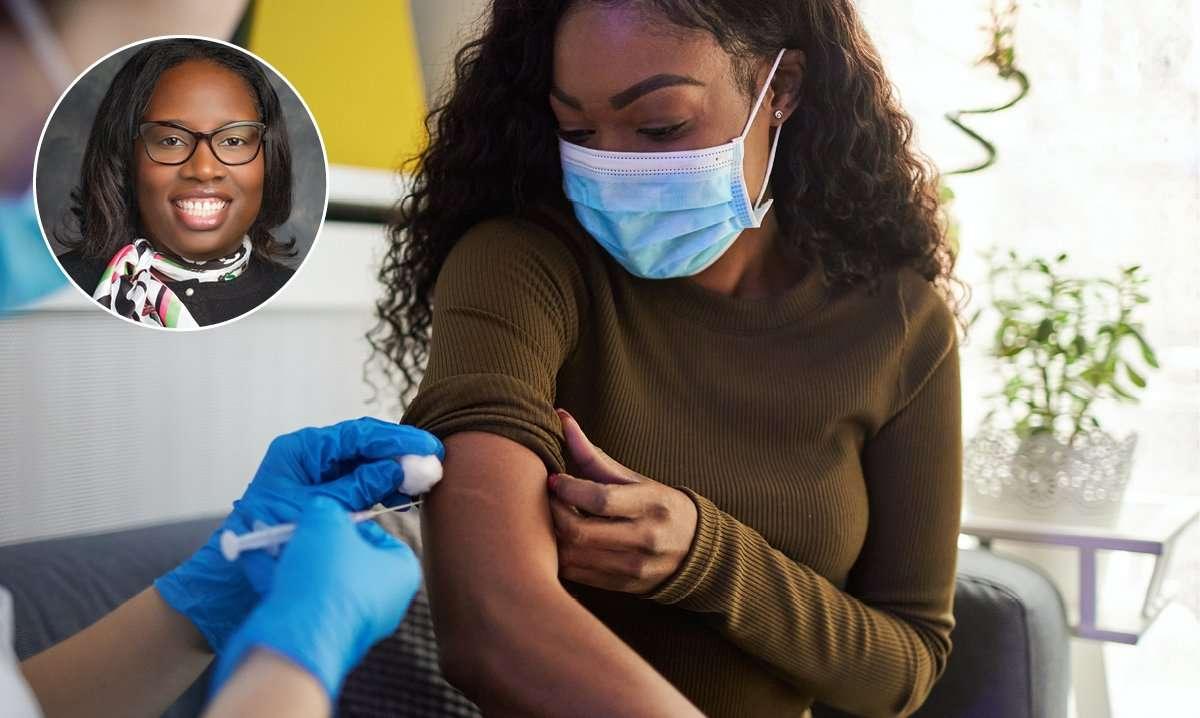
Dr. Jamila Taylor meets her patients’ concerns with empathy and information.

June 24, 2021 · Updated June 25, 2021
As the COVID-19 vaccine is now available to most who want it, concerns around vaccine hesitancy and distrust of the medical system are at the forefront. Why are some in the Black community choosing not to get this potentially life-saving vaccine? While reluctance is understandable, getting the facts is key. Family medicine physician Dr. Jamila Taylor says, “Fear of the current COVID-19 vaccinations should not be founded on fears from the past. Thankfully, even in this uncertain health crisis, we have seen a steady trend of people keeping their recommended vaccine schedules.”
Several states are steadily vaccinating more of their Black residents and closing the racial vaccination gap. Education around the science, safety and efficacy have helped. “I’ve found explaining the process to the patients helps, especially when it comes to the COVID vaccines. Understanding how messenger RNA helps code cells to produce and fight off the virus themselves can get complicated, but having the conversation with a Black physician who relates to you makes it easier,” Dr. Taylor says.
Many of the questions Dr. Taylor receives from her patients about vaccines, specifically the new COVID immunizations, echo theories and fears that stem from a variety of sources – both official and not. “I’ve had patients ask me about their reproductive system and if it might be harmed by the vaccine. Or patients with circulatory issues, who heard about the blood clotting cases, wonder whether the vaccine is safe for them. Those are valid questions to ask about one’s wellbeing,” Dr. Taylor says.
The speed with which the vaccines were developed is also an understandable point of hesitation for some, but there’s an explanation for that. “The vaccines did seem to arrive right when we needed them because the technology was in development years before. Messenger RNA vaccines were seen as groundbreaking and more effective than the ‘dead virus’ vaccines for a while before COVID, unexpected as it was. The science was secure, so the timeframe and technology of the COVID vaccine development can be viewed as a modern science success,” Dr. Taylor says.
The circulation of misinformation can be frustrating, she says, but we must take care to avoid dismissing those with questions and concerns, or labeling them conspiracy theorists. “We want people to take vaccines, but being hesitant about them can be borne from a lot of things other than just ‘ignorance,’” Dr. Taylor says. “Some people prefer or find good results with alternative or natural methods. Some have seen side effects and issues arise in people they know and love. I have to respect people’s autonomy while also providing them factual, evidence-based information in order to make an informed decision.”
Dr. Taylor says that we tend to receive the vaccinations we need to attend school as children, and then skip the critical ones needed in adolescence and adulthood. Often, this isn’t intentional on the part of the patient, who doesn’t always know that additional vaccines are recommended. “We can reference Henrietta Lacks and the Tuskegee experiments as why there is mistrust of the medical community, but the whole of the issue is that it’s hard to stay informed and knowledgeable in a system that was built without addressing health care inequities and social determinants of health. The disparity of care, treatment by doctors, access to quality care, and understandable information not being readily available – that’s what destroys trust over time,” she says.
From ease of access to aftercare, the patient experience is key to building trust. In the case of COVID, that trust is key to vaccine adherence that builds herd immunity and safeguards the community. Not every question can be answered, but the effort to connect and inform is critical. “I was one of the firsts within Ascension Michigan to receive my COVID vaccination, and, even as a longstanding doctor, I had reservations. But, ultimately, I trust the field I chose and understand that protecting myself also protects others. And that’s the message I try to convey to my patients,” Dr. Taylor says.
Get more health information and find a doctor near you by visiting ascension.org/michigan or calling 866-501-DOCS (3627).
Filed under
Every question deserves a better answer than a search result — here's where this story leads.

Why Every Metro Detroit Nonprofit Should Be Thinking About AI
How a local workshop is helping nonprofit leaders turn curiosity into practical action. For many nonprofit leaders, artificial intelligence still feels like something meant for Silicon Valley or Fortune 500 companies. It isn’t. Whether your organization has three employees or three hundred, AI is quickly becoming another tool that can help teams spend less time […]

Althea Gibson’s Second Act
Most people remember Althea Gibson as a tennis legend. Fewer know she also became the first Black woman to compete on the LPGA Tour, breaking another barrier and opening doors for generations of Black women golfers.

Detroit Jazz Festival 2026 Guide
A local guide to navigating the Detroit Labor Day weekend jazz celebration.
Help Us Get It Right
This coverage is a community project.
Spot something outdated? Know a person, business, or organization this story should connect to? A story we should tell next? It goes straight to our editors — privately.