
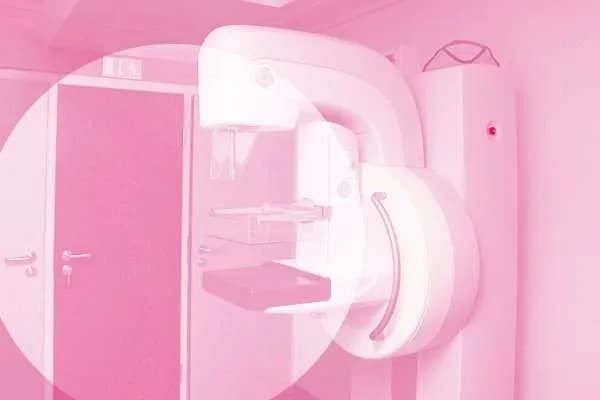

Breast cancer is the most commonly diagnosed cancer among women worldwide, according to the American Cancer Society. In the United States, it is the second leading cause of cancer death, and African-American women are at a particular risk. “Breast cancer has a disproportionately devastating impact on minorities,” says Nedi Gari, M.D., who specializes in Diagnostic Radiology at Ascension Providence Hospital in Southfield.
According to the CDC, African-American women are more likely than Caucasian women to get an aggressive type of breast cancer that often comes back after treatment. “A woman in the United States has a one in eight risk over the course of her lifetime of being diagnosed with breast cancer,” Dr. Gari says. Early diagnosis is essential to improved survival rates. Ascension Michigan uses 2D and 3D digital mammography and/or ultrasound to catch early signs of breast cancer.
Mammogram testing plays an important role in finding breast cancer. “It has been known for years that mammographic screening is able to detect a large percentage of breast cancers before they can be felt and when they are at a smaller size, earlier stage and more likely to be curable,” Dr. Gari says. Regular screenings make a difference.
“The most breast cancer deaths are prevented – and a life saved – when screening mammography is performed annually beginning at age 40,” she says. “Women with a family history of breast cancer should begin mammography no later than 10 years before the age of the earliest diagnosis in the family.”
Women who are considered at a higher risk for developing breast cancer should follow different guidelines, she adds. “Most women at high risk should begin screening with Mammography and MRI at age 30 and continue for as long they are in good health,” Dr. Gari says. “Some women at high risk may begin MRI screening at age 25.”
Some factors that increase the risk for breast cancer include having a breast cancer gene mutation, having a close relative (mother, father, brother, sister or child) with a gene mutation, a family history of breast cancer on both the mothers side of the family and father’s side. Breast density also plays a role, and patients with dense breasts should be screened with 3D mammography.
“Three-dimensional (3D) mammography is an advanced type of breast imaging that uses low-dose X-rays and computer reconstruction to create images of the breast. It aids in the early detection and diagnosis of breast cancer,” she says. 3D mammography has been shown by many research studies to improve the results of mammography. “If a woman chooses to have mammography, she should have the best possible outcome and that means 3D instead of 2D in almost all cases.”
Women can also perform a breast self-exam (BSE) at home and are encouraged to do so at least once per month, Dr. Gari says. Women between age 25 and 40 should have an annual breast exam by a health care provider.
Filed under